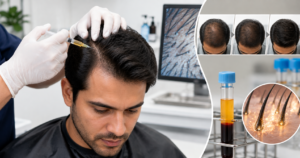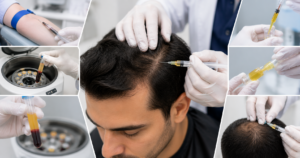
You did everything right. You researched the treatment, found what seemed like a good clinic, went through the sessions, and waited patiently. But the mirror told a different story. The hair didn’t come back. Or perhaps the initial improvement faded. Now you’re left wondering does PRP actually work, or was it all a waste?
You are not alone. A significant number of people who approach CFH Hair Transplant Clinic for a second opinion have had previous PRP experiences that fell short of expectations. And more often than not, the disappointment wasn’t because PRP doesn’t work, it’s because something in the process went wrong.
Let’s break down the most common reasons PRP fails, and more importantly, what your next step should look like.
Reason 1: You Were Not the Right Candidate
This is the most common and, unfortunately, the most overlooked factor. PRP works by stimulating existing but weakened follicles. If your hair loss has progressed to the point where follicles are no longer viable, PRP cannot regenerate them.
Many clinics, often driven by commercial incentives, offer PRP to patients regardless of their suitability. If your scalp has extensive slick bald areas with no underlying follicle activity, PRP is never going to deliver significant results. A proper trichoscopy assessment before treatment is non-negotiable, and if your previous provider skipped this step, that is a major red flag.
Reason 2: Poor Quality PRP Preparation
Not all PRP is created equal. The effectiveness of PRP is directly tied to the platelet concentration achieved during centrifugation. Substandard equipment, incorrect centrifuge speeds, or inexperienced preparation can result in plasma with minimal growth factor concentration essentially giving you an expensive injection of ineffective fluid.
Clinics that offer PRP at unusually low prices often cut corners in this area. High-quality PRP requires calibrated centrifuge kits, proper spin protocols, and experienced technicians. This is an area where quality truly matters.
Reason 3: Insufficient Number of Sessions
PRP is not a one-and-done treatment. A complete initial cycle typically involves 3 to 4 sessions spaced 4 to 6 weeks apart, followed by maintenance sessions every 6 to 12 months. Patients who undergo only one or two sessions either due to cost concerns or poor guidance rarely see meaningful, lasting improvement.
If you stopped after two sessions because “nothing was happening,” it is quite possible the treatment was working but hadn’t reached the threshold for visible results yet. Hair growth cycles are slow. Patience and a complete session plan are essential.
Reason 4: Lack of Complementary Treatment
Hair loss is rarely caused by a single factor. Androgenetic alopecia involves DHT sensitivity, poor follicle circulation, and miniaturization of hair shafts. PRP addresses follicle stimulation, but it works significantly better when combined with:
• Oral or topical medications (like minoxidil or finasteride) that address hormonal triggers
• Scalp care treatments that improve blood circulation and follicle environment
• Nutritional support addressing deficiencies in iron, biotin, zinc, or vitamin D
• GFC (Growth Factor Concentrate) therapy, which offers a higher concentration of growth factors than standard PRP
If your previous PRP was administered in isolation without any complementary protocol, the results would always be limited.
Reason 5: Inconsistent Injection Technique
The precision with which PRP is injected into the scalp significantly affects outcomes. The depth of injection, the distribution pattern, and the targeted areas all require clinical expertise. An inexperienced practitioner may miss the critical follicular layer or fail to target the most affected zones effectively.
PRP is a technique-sensitive procedure. The same plasma, injected differently by two practitioners, can yield very different results.
Reason 6: No Follow-Up or Aftercare Protocol
Many clinics deliver the injection and send you home with little to no guidance. Post-PRP care including avoiding certain medications, sun exposure, and aggressive hair products for a defined period plays a meaningful role in how well the treatment takes effect. Without proper aftercare instructions, even well-executed PRP can underperform.
Had a disappointing PRP experience? Let our experts assess what went wrong.
Get a Second Opinion at CFH
What to Do Next: A Smarter Path Forward?
If your previous PRP didn’t deliver results, here is a structured approach to getting a better outcome the next time:
Step 1 – Get a Proper Diagnosis
Before any treatment, have a thorough scalp analysis done. At CFH, we use trichoscopy and detailed hair health assessments to understand your current follicle status, the type and extent of hair loss, and the underlying causes. This determines whether PRP, GFC, combination therapy, or a hair transplant is the right path for you.
Step 2 – Understand Why Previous Treatment Failed
A good specialist will review your treatment history — the number of sessions, the protocol used, the kit quality, and the adjunct treatments (or lack thereof). This analysis often reveals exactly where the previous treatment fell short.
Step 3 – Commit to a Complete Treatment Cycle
If PRP for hair loss in Chennai is still appropriate for your condition, commit to a full cycle of sessions under proper guidance. Don’t stop after two sessions because results are slow to appear. Hair regrowth takes time and consistency.
Step 4 – Consider Combination Approaches
At CFH, many patients who had failed PRP experiences elsewhere achieve excellent results when we combine PRP with GFC therapy, scalp treatments, and targeted nutritional protocols. Sometimes the issue wasn’t PRP itself, it was the absence of a comprehensive plan.
Step 5 – Choose the Right Clinic This Time
When evaluating a clinic for prp hair treatment in Chennai, ask the right questions:
• Do they conduct a scalp assessment before recommending treatment?
• What centrifuge system and kit do they use?
• How many sessions do they recommend and why?
• What complementary treatments do they suggest?
• Do they provide before-and-after documentation of their results?
Clinics that can answer these questions confidently and honestly are the ones worth trusting with your treatment.
Why does CFH Approach PRP Differently?
At CFH Hair Transplant Clinic in Ramapuram, Chennai, we don’t treat PRP as a commodity procedure. Every patient who walks through our doors with a failed PRP history receives a detailed review of their case before we make any recommendations. Our team is committed to:
• Evidence-based candidacy assessment we only proceed with PRP when the evidence supports it
• Premium PRP preparation using calibrated centrifuge systems for optimal platelet yield
• A structured session plan with clearly communicated timelines and expectations
• Integration with complementary treatments where clinically appropriate
• Thorough aftercare protocols and follow-up assessments
If you’ve already tried PRP treatment for hair loss and been disappointed, that experience doesn’t have to be the end of the story. The right approach applied at the right time, by the right hands can still turn things around.
The Takeaway
Failed PRP doesn’t mean failed hair. In most cases, it means the wrong approach, the wrong clinic, or incomplete treatment. Before you give up on PRP entirely, invest in one honest consultation that breaks down exactly what went wrong and what a better plan looks like for you specifically.
Your hair loss journey deserves more than generic treatments and empty promises. It deserves a plan built around your unique condition and a team that will tell you the truth.