Hair loss does not always begin with a completely bald patch. For many people, it starts quietly: the scalp becomes slightly more visible, the hair part gradually widens, the crown looks thinner, or individual strands become finer than before.
This raises an important question: Can PRP hair treatment improve hair density if you still have hair?
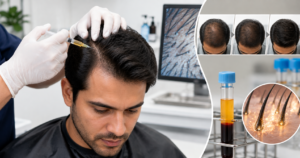
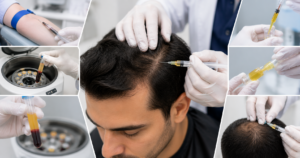
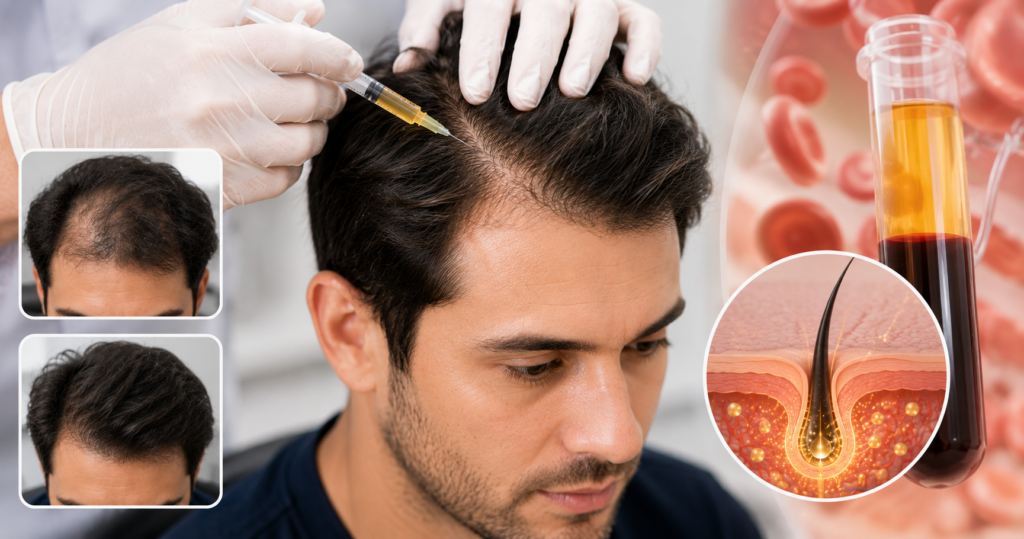
Yes, PRP may help selected patients with thinning hair, particularly when follicles are still present but weakened or miniaturized. PRP, or Platelet-Rich Plasma, uses concentrated platelets and growth factors from your own blood and injects them into targeted areas of the scalp. Clinical studies have reported improvements in hair density in people with androgenetic alopecia, although treatment protocols and individual responses vary.
What Does Hair Density Actually Mean?
Hair density refers to the number of hairs growing within a specific area of the scalp.
You can have a significant reduction in density without becoming completely bald. This commonly happens when hair follicles gradually produce finer, shorter strands. The scalp may then become increasingly visible even though hair continues to grow.
This distinction matters because PRP works by supporting existing, viable follicles. It does not create a new follicle where one has been permanently lost.
Can PRP Improve Hair Density Before Complete Baldness?
For appropriate candidates, PRP may improve hair density by supporting weakened follicles and encouraging healthier follicular activity.
A 2023 systematic review and meta-analysis of randomized controlled trials found that PRP increased hair density at three and six months compared with placebo in patients with androgenetic alopecia.
A 2024 meta-analysis also found an increase in hair density following PRP treatment, although the researchers described the evidence as low quality because the studies differed substantially in their methods and treatment protocols.
So, the realistic answer is not that PRP will automatically make thinning hair thick again. Rather, patients with remaining active follicles may have a better opportunity to benefit than those with long-standing areas of complete follicle loss.
Worried That Your Hair Density Is Decreasing?
You don’t need to wait until visible baldness develops before getting your scalp evaluated. Identifying the cause and stage of hair loss can help determine which options are realistic.
Which Hair Loss Stages May Respond Better to PRP?
Early Hair Thinning
This is often the stage where intervention is most useful.
You may notice increased shedding, a slightly receding hairline, reduced crown density, or finer hair strands. There may still be considerable follicular activity, making this an appropriate stage for a dermatologist to evaluate PRP.
Moderate Hair Thinning
PRP may also be considered when thinning is more noticeable but viable follicles remain throughout the affected area.
The objective is generally to support existing hair rather than replace missing follicles.
The Indian Association of Dermatologists, Venereologists and Leprologists’ consensus recommendations identify selected patients with Norwood Hamilton grade II to V androgenetic alopecia as an appropriate group for PRP consideration.
Advanced Hair Loss
If an area has been completely bald for a prolonged period, PRP alone is unlikely to restore substantial hair because there may be insufficient viable follicles to stimulate.
In such situations, a dermatologist may discuss surgical restoration options, including hair transplant in chennai, depending on the patient’s donor hair and overall suitability.
Get a professional scalp evaluation at CFH Hair Transplant & Skin Clinic and understand whether PRP may be appropriate for your hair loss pattern.
Conclusion
PRP may improve hair density in selected people who are experiencing thinning but still have viable hair follicles. It is particularly relevant to early and moderate stages of certain forms of pattern hair loss.
However, PRP cannot recreate follicles that have been permanently lost. The best candidates are identified through a professional assessment of the scalp, hair-loss pattern, follicle condition, medical history, and treatment expectations.
The goal should not be to wait until baldness becomes obvious. Early evaluation can help you understand whether your existing follicles still have an opportunity to respond.
Ready to Understand Your Hair Loss Before It Progresses?
If your hair is becoming thinner but you are not completely bald, this may be the right time to investigate what is happening rather than simply watching the density decrease.
Consult the hair restoration specialists at CFH Hair Transplant & Skin Clinic for a personalized scalp assessment and treatment recommendation based on your individual hair-loss stage.
What Factors Affect PRP Results?
Not everyone responds to PRP in the same way. Results can depend on the cause and duration of hair loss, follicle condition, overall health, treatment protocol, and consistency with recommended sessions.
The way PRP is prepared may also matter. IADVL recommendations provide specific guidance on preparation and treatment protocols, while research continues to investigate which approaches produce the most consistent outcomes.
Patients considering prp treatment in chennai should therefore focus on proper diagnosis and individualized treatment rather than choosing a clinic based only on the number of sessions or promotional claims.
How Long Does It Take to See Improvement?
PRP does not produce instant hair growth. Hair follicles follow a biological growth cycle, so changes in density take time.
Clinical trials commonly evaluate results several months after treatment rather than immediately after the procedure. Research has reported improvements in hair density at around three and six months in some patients.
Your dermatologist may recommend an initial series of sessions followed by maintenance treatment depending on your response and underlying condition.
PRP or Hair Transplant: Which Is Better for Thinning Hair?
These treatments are designed for different situations. PRP aims to support follicles that are still present but weakened. A hair transplant relocates healthy donor follicles to areas where hair has been permanently lost.
Therefore, someone with early or moderate thinning may be evaluated for PRP, while someone with extensive permanent baldness may be considered for hair transplant in chennai.
In selected cases, both approaches may form part of a broader hair restoration plan.
Is PRP Suitable for Everyone With Hair Thinning?
No. Hair thinning can result from androgenetic alopecia, thyroid disorders, nutritional deficiencies, stress, hormonal changes, scalp disorders, medications, and other causes.
A dermatologist should identify the underlying cause before recommending treatment. Treating an underlying medical problem may be more important than proceeding directly with PRP.
If you are considering prp hair treatment in chennai, a proper diagnosis can help determine whether PRP, medication, GFC, nutritional correction, transplantation, or a combination approach is appropriate.