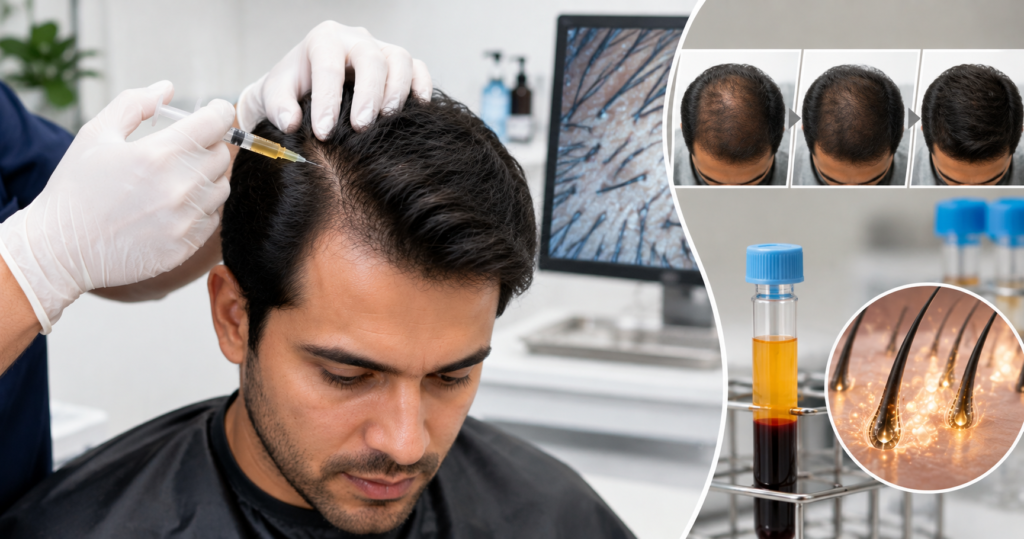
GFC hair treatment may help slow or improve progressive hair thinning in carefully selected patients, especially when follicles are still present but becoming weaker. It should not, however, be described as a guaranteed way to prevent permanent baldness. Androgenetic alopecia can progress through follicular miniaturization, so early diagnosis gives a patient options. Current research on concentrated growth factor injections is encouraging, but the evidence is still developing and treatment protocols are not standardized.
What Happens to Hair Follicles During Progressive Hair Loss?
Progressive hair loss is more than daily shedding. In androgenetic alopecia, genetically susceptible follicles gradually become smaller under androgen influence. Hair shafts become finer, the growth phase may shorten, and visible density decreases. With continued miniaturization, some follicles may eventually produce little visible hair.
How Could GFC Help During Earlier Hair Loss?
GFC uses concentrated growth factors prepared from the patient’s own blood and injected into selected scalp areas. These biological signals are intended to support the follicular environment and cellular activity involved in tissue repair and hair growth.
Clinical findings are promising but should be interpreted cautiously. A 2024 study reported improved hair density and growth after three concentrated growth factor injections. A 2026 systematic review and meta-analysis also found improvements in hair density and thickness across growth-factor injection studies, while noting substantial heterogeneity and risk of bias. The evidence therefore supports potential benefit, not a promise that GFC permanently stops hair loss.
Who May Benefit Most From GFC?
GFC may be considered for patients with early or moderate patterned thinning, visible miniaturized hairs, or declining density without extensive smooth bald areas. Suitability depends on diagnosis, hair-loss pattern, scalp condition, medical history, and treatment goals.
Patients should also understand that GFC does not create brand-new follicles. Its potential role is to support existing follicles that retain regenerative capacity. If an area has been completely bald for a long period, injectable growth-factor treatment alone may be less likely to restore meaningful density.
When Should You Consider GFC Instead of Waiting?
If you notice a widening part, increasing scalp visibility, a receding hairline, a thinner crown, or persistent shedding, a professional assessment is sensible. At a GFC treatment in Chennai consultation, a dermatologist can examine the scalp and determine whether GFC is appropriate or another treatment should come first. Depending on the diagnosis, management may include medication, correction of nutritional or hormonal contributors, procedural treatment, or transplantation.
GFC Is Not a Substitute for a Complete Hair-Loss Plan
One common mistake is treating GFC as a standalone cure. A patient with active androgenetic alopecia may need medical therapy to address the underlying progression while GFC is considered as an adjunct. Another patient may have advanced follicular loss and need surgical assessment. A hair transplant clinic in Chennai can evaluate donor density, recipient areas, hair-loss stage, and whether transplantation is appropriate.
If your hair is becoming thinner month by month, do not wait until the follicles become difficult to treat. Book a dermatologist-led assessment to identify the cause and discuss whether GFC could fit your plan.
Book a Consultation
What Results Can You Realistically Expect?
The realistic goal is stabilization or improvement in density, not guaranteed complete restoration. Research has reported increases in hair density and thickness after growth-factor injections, but outcomes differ between patients and protocols.
A responsible clinic should establish baseline photographs or trichoscopic measurements and review progress. This helps distinguish genuine change from normal shedding fluctuations and supports decisions about continuing or modifying treatment. A 2026 systematic review found encouraging improvements with growth-factor injections but also emphasized high heterogeneity and study-quality limitations, reinforcing the need for realistic expectations.
How Do You Know If GFC Is Appropriate for You?
A consultation should begin with diagnosis rather than a sales pitch. Your clinician may ask about the duration and pattern of hair loss, family history, recent illness, medications, diet, stress, hormonal changes, and previous treatments. Scalp examination and trichoscopy can help identify miniaturization and other findings.
When comparing a gfc hair treatment in Chennai provider, look for medical supervision, clear eligibility criteria, transparent planning, sterile injection practices, realistic outcome discussions, and documented follow-up. Ask how the treatment is prepared, how sessions are spaced, and what outcomes are measured.
Can GFC Prevent Permanent Hair Loss?
It may help some patients manage early progressive thinning, but it cannot be described as a guaranteed preventive treatment for permanent hair loss. The main advantage of early assessment is that treatment choices are generally broader while follicles remain viable.
If significant baldness has developed, a hair transplant clinic in Chennai may evaluate whether transplantation can restore density in suitable areas. The decision depends on donor supply, recipient condition, pattern stability, and overall health.
Concerned that progressive thinning is moving toward visible baldness?
Get a professional diagnosis before choosing a procedure. A dermatologist can explain whether GFC, medical treatment, transplantation, or a combination is appropriate for you.
Schedule Your Hair Consultation
Conclusion
GFC is a promising regenerative option for selected patients with progressive hair thinning, particularly when follicles are still active. Current studies show encouraging improvements in hair density and thickness, but evidence remains limited by small studies, differing protocols, and methodological limitations. Rather than waiting for advanced baldness, seek a dermatologist-led assessment and build a plan around the actual cause and stage of hair loss.
For patients exploring a gfc hair treatment in Chennai, the right first step is a diagnosis-led consultation, not a promise of guaranteed regrowth. GFC treatment in Chennai should be considered only after the cause and stage of hair loss are assessed.
Frequently Asked Questions
1. Can GFC completely stop hair loss?
No. GFC should not be considered a guaranteed cure for every type of hair loss. It may support existing follicles in suitable patients, but the underlying cause of hair loss still needs to be diagnosed and managed.
2. Is GFC effective for early-stage hair loss?
GFC may be more suitable when follicles are still active and there is early or moderate thinning. Advanced areas with long-standing complete baldness may respond less predictably.
3. How many GFC sessions are usually needed?
The number of sessions depends on the diagnosis, degree of thinning, follicular health, and individual response. Clinical studies have used different schedules, so a dermatologist should determine the appropriate treatment plan rather than relying on a fixed package.
4. How long does it take to see results after GFC?
Hair growth occurs gradually, so improvement should not be judged immediately after treatment. Studies have reported changes in hair density during follow-up periods of several months. Regular clinical photographs or trichoscopy can help evaluate progress objectively.
5. Is GFC better than a hair transplant for progressive hair loss?
They serve different purposes. GFC aims to support existing follicles, while transplantation moves viable follicles from a donor area to areas requiring restoration. The appropriate option depends on the stage and pattern of hair loss, donor supply, and follicular viability.