Can PRP Hair Treatment Help Patients with Thyroid or PCOS-Related Hair Loss?
Hair loss can be emotionally challenging, especially when it is caused by an underlying medical condition rather than genetics alone. Two of the most common health conditions associated with excessive hair shedding are thyroid disorders and Polycystic Ovary Syndrome (PCOS) hair loss. Many patients experiencing these conditions often ask whether Platelet-Rich Plasma (PRP) therapy can help restore hair growth.
The answer depends on the underlying cause of the hair loss, its severity, and how well the medical condition is being managed. PRP therapy is designed to stimulate weakened but living hair follicles, making it a promising option for many patients experiencing hair thinning due to thyroid imbalance or PCOS. However, it is not a replacement for treating the underlying medical condition.
If you are considering prp treatment in chennai, understanding how PRP works alongside medical management can help you make an informed decision about your hair restoration journey.
How Do Thyroid Disorders and PCOS Cause Hair Loss?
Hair follicles require a healthy balance of hormones, nutrients, and blood circulation to remain in the active growth phase. When hormonal imbalances occur, the normal hair growth cycle is disrupted.
Thyroid-Related Hair Loss
Both hypothyroidism and hyperthyroidism can interfere with the hair growth cycle. Patients may notice:
- Diffuse hair thinning across the scalp
- Increased hair shedding while combing or washing
- Dry and brittle hair
- Slower hair regrowth
Hair loss usually improves once thyroid hormone levels are properly controlled, although some individuals may continue to experience reduced hair density.
PCOS Hair Loss
Polycystic Ovary Syndrome is one of the leading hormonal causes of hair thinning in women. Increased androgen (male hormone) levels can gradually shrink hair follicles, leading to:
- Progressive hair thinning along the crown
- Reduced hair volume
- Widening of the hair part
- Increased daily hair fall
Many women explore PRP for PCOS Hair Loss as part of a comprehensive treatment plan recommended by their dermatologist and endocrinologist.
How Does PRP Hair Treatment Work?
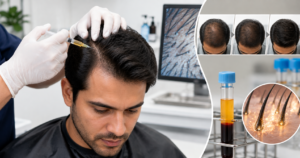
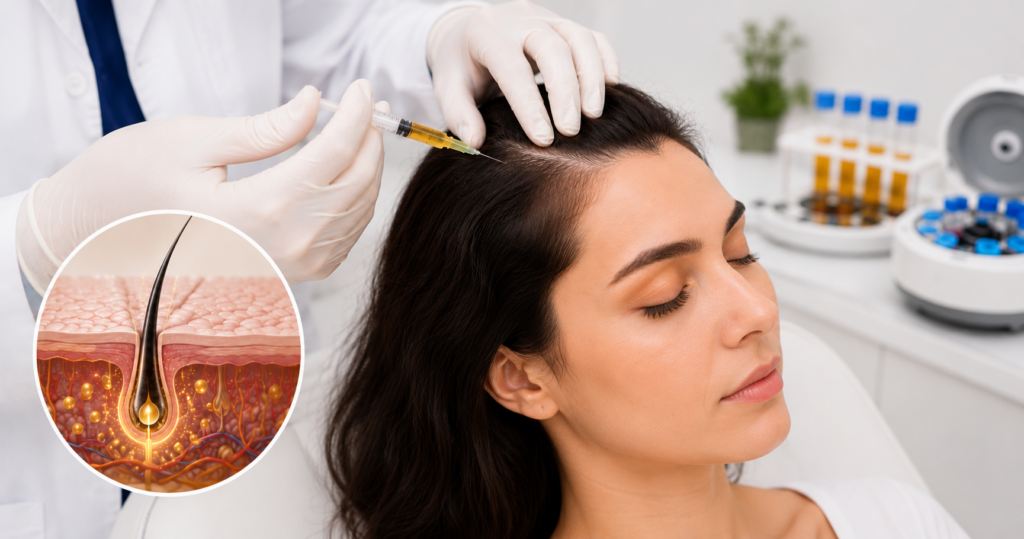
Platelet-Rich Plasma therapy uses concentrated platelets prepared from your own blood. These platelets contain natural growth factors that support tissue repair and help stimulate weakened hair follicles.
During the procedure:
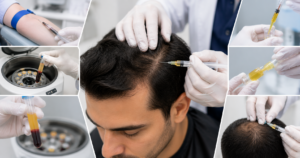
- A small blood sample is collected.
- The blood is processed to separate platelet-rich plasma.
- The concentrated plasma is injected into areas experiencing hair thinning.
Growth factors help improve blood circulation around the follicles, encourage healthier scalp tissue, and stimulate follicles that are still active but producing thinner hair.
Many patients choose prp hair treatment in chennai because it is a minimally invasive procedure with little downtime.
Can PRP Help Patients with Thyroid-Related Hair Loss?
Yes, but only under the right circumstances. PRP therapy may benefit patients whose thyroid condition is already being medically managed and whose hair follicles remain healthy enough to respond to stimulation.
Dermatologists usually recommend:
- Stabilizing thyroid hormone levels first
- Identifying nutritional deficiencies
- Evaluating scalp health
- Assessing the stage of hair loss
When combined with appropriate medical treatment, PRP may help improve hair density and reduce ongoing thinning.
Concerned About Hair Loss Caused by PCOS or Thyroid Problems?
Every type of hair loss requires a different treatment approach. A detailed scalp analysis and medical evaluation can help identify whether PRP is suitable for your condition.
Is PRP Effective for PCOS Hair Loss?
Many women ask whether PRP for PCOS Hair Loss actually works.
PCOS-related hair thinning occurs because elevated androgen levels gradually weaken hair follicles. While PRP cannot cure PCOS, it may support healthier follicle function once hormone levels are appropriately managed.
Several factors influence treatment success:
- Early diagnosis
- Controlled hormonal imbalance
- Healthy scalp condition
- Consistent treatment sessions
- Proper nutrition
Women experiencing early-stage thinning often respond more favorably than those with long-standing follicle damage.
Factors That Influence PRP Treatment Success
Results vary because every patient’s hair loss pattern is different.
Control of the Underlying Medical Condition
PRP works best when thyroid disorders or PCOS are already being managed by a physician.
Stage of Hair Loss
Hair follicles that remain active are more likely to respond to regenerative treatment.
Lifestyle and Nutrition
Protein intake, iron levels, vitamin deficiencies, stress management, and sleep all influence healthy hair growth.
Consistency of Treatment
Completing the recommended treatment sessions improves the chances of achieving noticeable results.
Patients considering prp treatment in chennai should understand that PRP works as part of a comprehensive hair restoration strategy rather than as a standalone cure.
When Is Hair Transplant a Better Option?
Not every patient experiencing thyroid or PCOS-related hair loss requires surgery.
However, if follicles have become permanently inactive or significant bald areas have developed, your dermatologist may recommend hair transplant in chennai instead of regenerative therapies.
In some cases, PRP therapy may also be used before or after transplantation to support scalp healing and improve the condition of existing hair.
A detailed consultation helps determine the most appropriate treatment based on your scalp examination and medical history.
What Results Can You Expect?
Hair growth is a gradual biological process.
Patients who are suitable candidates may notice:
- Reduced hair shedding within several weeks
- Improved scalp health
- Better hair thickness over the following months
- Increased overall hair density with maintenance sessions
The exact timeline varies depending on the cause of hair loss, hormone control, and individual response to treatment.
Individuals receiving prp hair treatment in chennai should maintain realistic expectations and continue regular follow-up appointments with their dermatologist.
Conclusion
Hair loss caused by thyroid disorders or PCOS can be distressing, but it is often manageable with the right combination of medical care and regenerative treatment. PRP therapy offers a promising option for stimulating weakened hair follicles, particularly when hormonal conditions are well controlled and treatment begins early.
For women exploring PRP for PCOS Hair Loss or individuals experiencing thyroid-related hair thinning, the first step should always be a professional evaluation. Understanding the root cause of hair loss allows your dermatologist to recommend the most effective and personalized treatment plan.
Ready to Find the Right Hair Loss Solution?
Whether your hair loss is related to hormones, genetics, or another medical condition, early diagnosis can make a significant difference in preserving healthy hair.
Frequently Asked Questions
Can PRP treat hair loss caused by thyroid disorders?
PRP may help improve hair growth in patients whose thyroid condition is medically controlled and whose hair follicles remain active. A dermatologist will determine whether you are a suitable candidate.
Is PRP effective for women with PCOS?
Many women choose PRP for PCOS Hair Loss as part of a comprehensive treatment plan. Results depend on hormone control, the stage of hair thinning, and overall scalp health.
Does PRP cure PCOS or thyroid disease?
No. PRP is designed to support hair follicle regeneration. It does not treat the underlying hormonal condition, which requires medical management.
How many PRP sessions are usually needed?
The number of sessions varies depending on your hair loss pattern and medical condition. Your dermatologist will recommend a customized treatment schedule after evaluation.
When should I consider a hair transplant instead of PRP?
Patients with permanent follicle loss or advanced baldness may benefit more from hair transplant in chennai, while PRP is generally more effective for early to moderate hair thinning where follicles are still active.